
Attracting Top-Tier Leadership Talent: The Future of Executive Recruitment
Updated: Sep 10
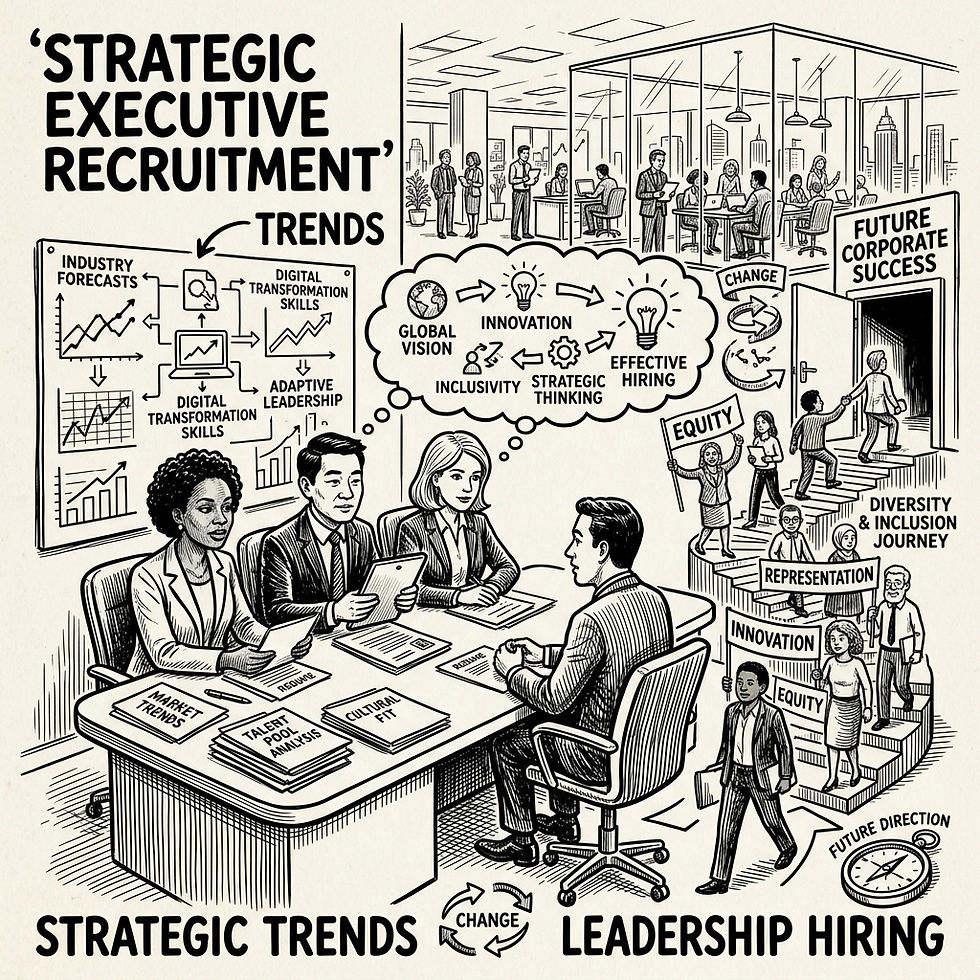
Attracting and retaining top-tier leadership talent is more complex than ever. Today’s dynamic business landscape requires companies to rethink their executive recruitment strategies, focusing on diversity, inclusion, and long-term leadership growth.
The Evolution of Leadership Hiring Trends
Leadership hiring trends are rapidly evolving. Organizations are now prioritizing inclusive leadership recruitment. They seek executives who champion diversity and possess emotional intelligence alongside traditional skills. Top executive recruitment firms have shifted their headhunting techniques. They leverage AI-powered assessments and structured interviews to minimize bias and improve fit.
Diversity in Executive Search: Why It Matters
Diversity in executive search is no longer optional. Companies with diverse senior leadership teams outperform their peers. Hiring diverse executives brings fresh perspectives and signals a commitment to corporate social responsibility. Inclusive leadership recruitment ensures organizations are future-ready and positioned for sustainable success.
Building a Strong Executive Talent Pipeline
Developing an effective executive talent pipeline is essential for corporate leadership growth and strategic executive placement. This involves proactive succession planning. Identifying potential leaders early and investing in their development is crucial. Senior leadership talent acquisition should align with long-term company goals. This alignment ensures a steady flow of qualified candidates.
The Importance of Succession Planning
Succession planning is vital for any organization. It prepares companies for unexpected leadership changes. By identifying potential leaders early, organizations can nurture their skills and ensure a smooth transition when the time comes. This proactive approach reduces the risks associated with sudden vacancies.
Investing in Leadership Development
Investing in leadership development is not just beneficial; it is essential. Organizations should provide training programs and mentorship opportunities. These initiatives help potential leaders grow and prepare for future roles. By fostering a culture of continuous learning, companies can build a robust talent pipeline.
Executive Onboarding Best Practices
Securing the right C-suite talent is just the beginning. Executive onboarding best practices include comprehensive orientation. Clear communication of expectations and ongoing support are also crucial. Smooth transitions help new leaders integrate quickly, preventing costly executive hiring mistakes.
Creating a Welcoming Environment
A welcoming environment is key to successful onboarding. New executives should feel supported from day one. This can be achieved through team introductions, clear resources, and open lines of communication. A positive onboarding experience sets the tone for future success.
Continuous Feedback and Support
Ongoing support is essential during the onboarding process. Regular check-ins and feedback sessions can help new leaders adjust to their roles. This continuous support fosters a sense of belonging and encourages open dialogue, which is vital for long-term success.
Overcoming C-Suite Recruitment Challenges
C-suite recruitment poses unique challenges. Competition for top talent is fierce, and cultural misalignment risks are high. Swiftly changing market demands add another layer of complexity. Partnering with top executive recruitment firms can mitigate these risks. Applying strategic executive placement methods ensures that organizations find the right fit.
The Role of Executive Recruitment Firms
Executive recruitment firms play a crucial role in the hiring process. They have access to extensive networks and resources. These firms can help organizations navigate the complexities of C-suite recruitment. By leveraging their expertise, companies can streamline their hiring processes and improve outcomes.
Regularly Reviewing Recruitment Processes
Regularly reviewing and refining recruitment processes is essential for continuous improvement. Organizations should assess their strategies and outcomes frequently. This practice allows companies to adapt to changing market conditions and improve their chances of securing top talent.
Conclusion
In a rapidly changing world, successful executive recruitment means more than just filling senior positions. It’s about embracing inclusive leadership, fostering diversity, and strategically developing leaders who will guide organizations into the future. By avoiding common executive hiring mistakes and focusing on comprehensive talent management, companies can secure the visionary leaders needed for long-term success.
In this competitive landscape, the importance of a strong executive talent pipeline cannot be overstated. It empowers organizations to thrive and innovate. By prioritizing diversity and inclusion, we can create a brighter future for all.
For more insights on executive recruitment, visit Xperts Inc..


Comments